

Most people think of adjustable beds as a hospital thing. The kind of bed you use when you’re recovering from surgery, not the kind you’d actually want in your bedroom.
That’s a perception worth updating.
Adjustable mattress benefits go well beyond the hospital association. Modern adjustable bases are quietly engineered pieces of furniture that let you raise your head, elevate your legs, find a zero-gravity position, or customize each side of the bed independently for you and your spouse. And the health benefits that come from sleeping at the right angle, for your specific body and conditions, are genuinely well-documented.
This article covers what adjustable mattresses and bases actually do, the specific health conditions they help most, what the research says (not just the marketing), what to look for before you buy, and who this type of setup is and isn’t right for. If you or your spouse deals with back pain, acid reflux, snoring, circulation issues, or difficulty getting in and out of bed, this is worth your time to read carefully.
Let’s get into it.
What “Adjustable Mattress” Actually Means
Before getting into the benefits, let’s clear up the terminology since it causes more confusion than it should.
When most people say “adjustable mattress,” they usually mean one of two different things:
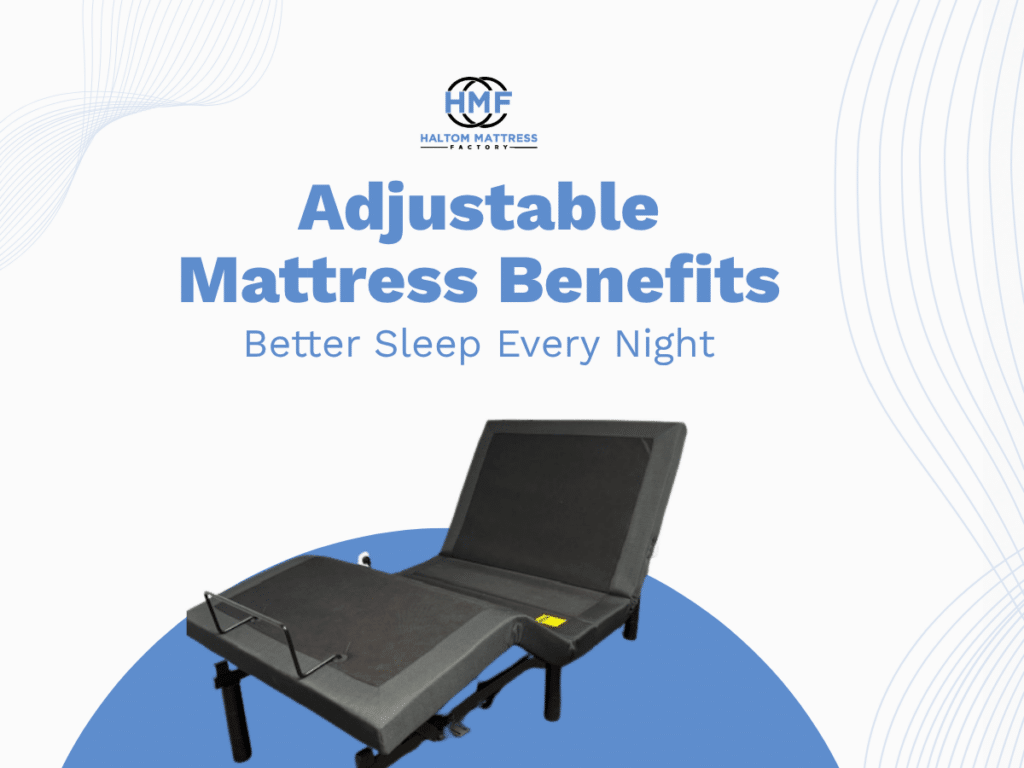
An adjustable base (also called a power base or adjustable bed frame) is the motorized foundation that raises and lowers the head and foot of your existing mattress. This is what most of the health benefits are actually tied to. You keep your mattress and swap out the base. The base does the work.
An adjustable firmness mattress (like a Sleep Number bed) is a mattress with air chambers built in that let you change how firm or soft the sleeping surface feels. Each side can be set independently, which is useful for couples with different firmness preferences.
Both types have real advantages. For this article, we’ll focus primarily on adjustable bases since they’re the more widely available option, the one most connected to documented health benefits, and the type available at Haltom Mattress Factory. Our dedicated page on adjustable beds and mattresses in Fort Worth covers the options in more detail if you want to compare side by side.
Here’s something most articles on this topic skip entirely: not all mattresses work with an adjustable base. Memory foam, latex, and most quality hybrid mattresses flex without damage and are generally compatible. Traditional innerspring mattresses with rigid coil systems often are not. This is a critical question to ask before you buy either the base or the mattress. Our memory foam versus innerspring comparison walks through the flexibility and compatibility differences.
Curious whether your current mattress would work on an adjustable base? That’s one of the easiest questions our team can answer. Come in or give us a call before you make any decisions.
Adjustable Mattress Benefits for Back Pain
Back pain is the single most common reason people research adjustable bases. And there’s solid clinical reasoning behind why these bases actually help.
Approximately 39 percent of Americans suffer from back pain. For those people, finding a comfortable sleeping position on a flat mattress can be genuinely challenging, especially when pain limits how long they can hold any single position.
Here’s the core of how it works. When you sleep completely flat, your lumbar spine carries a certain amount of pressure from the weight of your body. That pressure changes significantly based on the angle of your legs and upper body. Raising the foot of the bed by 15 to 30 degrees reduces pressure on the intervertebral discs in your lower back. This can meaningfully reduce the stiffness and aching that builds up overnight for people with herniated discs, spinal stenosis, or general lower back pain.
The zero-gravity position, a specific preset available on many adjustable bases, elevates both your head and your feet to roughly the same height, distributing your body weight more evenly and reducing lumbar disc pressure significantly. For people with herniated discs, spinal stenosis, or chronic lower back pain, this single adjustment can improve sleep quality in ways a flat mattress simply cannot match.
It’s worth being clear about what adjustable bases can and can’t do for back pain. They address positional causes of pain, meaning pain that worsens because of how the spine is loaded during sleep. They don’t fix structural damage or replace medical treatment. But for the majority of people whose morning back stiffness is related to how they sleep rather than a serious structural problem, position changes at night can make a real difference in how they feel during the day.
Our best mattress for back pain guide covers the mattress side of this equation since the right combination of adjustable base and supportive mattress works better than either one alone.
Waking up stiff every morning? An adjustable base may be a real part of the answer. Come in and we’ll show you what the positions actually feel like.
Adjustable Mattress Benefits for Acid Reflux and GERD
If you’ve ever had to sleep propped up on a stack of pillows to keep acid reflux from waking you up, you already understand the problem. Pillows shift. They don’t hold a consistent angle. And stacking four of them under your upper body while your lower body stays flat creates its own set of pressure problems.
An adjustable base solves this cleanly. By raising the head of the bed to a consistent, precise angle, you use gravity to keep stomach contents below the lower esophageal sphincter throughout the night, which is exactly what the treatment guidelines recommend.
The clinical support here is among the strongest of any adjustable base benefit. A randomized controlled trial published in the Journal of Gastroenterology and Hepatology found that head-of-bed elevation reduced esophageal acid exposure time by 67 percent and significantly reduced reflux symptoms. The Canadian Association of Gastroenterology includes bed elevation in its GERD management guidelines as a first-line lifestyle modification.
The recommended elevation is 6 to 8 inches, which on most adjustable bases corresponds to roughly one-third of the maximum head position. Less than 15 degrees produces minimal benefit. More than 30 degrees can cause you to slide down during the night. The right angle is usually something you find through a few nights of adjustment rather than setting it to maximum and hoping for the best.
According to Banner Health, adjustable bases are genuinely helpful for gastroesophageal reflux, since stomach acids are less likely to travel into the esophagus when the head of the bed is elevated. This is one of the most evidence-based benefits associated with adjustable beds.
One thing worth knowing: the mattress you pair with an adjustable base matters for reflux too. If the mattress is too thick or too rigid to flex properly at the head elevation you need, the base can’t do its job effectively. Generally, mattresses under 13 inches with flexible foam or latex construction work best. Our team can walk you through which mattresses in our lineup are best suited for adjustable base use.
Dealing with nighttime heartburn or GERD? This is worth talking through. The right setup can genuinely reduce your symptoms, and it’s less complicated to put together than most people assume.
Adjustable Mattress Benefits for Snoring, Circulation, and Mobility
Back pain and acid reflux get most of the attention in adjustable base conversations, but several other benefits matter a lot for adults over 60 and are worth knowing about.
Snoring and sleep apnea. When you sleep completely flat on your back, gravity pulls soft tissue in your throat downward, which can partially block the airway and cause snoring or worsen mild sleep apnea. Raising the head of the bed keeps the airway more open, which reduces snoring for many back sleepers. It’s important to be accurate about the limits here: adjustable beds can reduce snoring and mild airway obstruction through head elevation, but they do not treat diagnosed obstructive sleep apnea. CPAP therapy remains the gold standard for sleep apnea treatment. However, head elevation on an adjustable base can complement CPAP use by keeping the airway more open. So if your doctor has already prescribed a CPAP, an adjustable base can work alongside it, not replace it.
Circulation and leg swelling. Elevating your legs above your heart level encourages blood to flow back toward the heart rather than pooling in the lower legs and feet. Adjustable mattress bases let you raise your legs, promoting better blood flow and reducing swelling. This feature particularly benefits individuals with varicose veins or those recovering from surgery. For people who sit or stand for long periods during the day and notice leg swelling or fatigue by evening, elevating the foot of the bed at night provides passive relief that’s hard to replicate any other way.
Getting in and out of bed. This is the benefit that genuinely changes daily quality of life for many adults over 60 and is rarely discussed in mainstream adjustable base articles. For seniors or those recovering from surgery, getting in and out of bed can be a challenge. Adjustable bases can raise you into a more upright seated position, making movement easier and more independent. Instead of having to push yourself up from a flat surface, you can raise the head of the bed first, which puts you in a more seated position and significantly reduces the physical effort required to stand up. For anyone with hip pain, knee pain, or balance concerns, this is a meaningful safety and comfort feature.
Reading, watching TV, or working in bed. This one is straightforward but worth naming. An adjustable base means you’re not stacking pillows behind you awkwardly or straining your neck to watch television from a flat position. The ergonomic support from a raised head position is genuinely more comfortable for extended periods spent in bed other than sleeping.
If any of these benefits apply to your situation, our adjustable beds and mattresses guide covers the specific features to look for. And if you’re also thinking about the right mattress to pair with an adjustable base, our best mattresses in Fort Worth roundup identifies which options are adjustable-base compatible.
Not sure whether these benefits apply to your specific situation? Come in and describe what’s been bothering your sleep. We’ll tell you honestly whether an adjustable base is likely to help.
Conclusion
An adjustable base isn’t a luxury purchase for most people who choose one. It’s a sleep tool that solves specific, real problems, and for the right person, it makes a measurable difference in how they feel every day.
Adjustable mattress benefits are clearest for people dealing with back pain, acid reflux, snoring, leg swelling, or difficulty getting in and out of bed. The clinical evidence for several of these, particularly acid reflux and lumbar pressure relief, is strong and consistent. For couples with different sleep needs, a split-king adjustable setup removes the compromise that usually comes with sharing a bed.
That said, an adjustable base isn’t for everyone. Healthy sleepers who are comfortable flat and have no specific conditions to address may not notice a dramatic difference. And the setup does require the right mattress to work properly, which is a question worth settling before you buy anything.
If you’re curious whether an adjustable base makes sense for your situation, the fastest way to find out is to come in and try one. At Haltom Mattress Factory in Fort Worth, we carry adjustable base options and compatible mattresses, and our team can walk you through which combinations actually make sense for your health needs, your bedroom, and your budget.
Come visit us. Bring your questions. We’ll give you honest answers and plenty of time to try the positions that matter most to you.
Great place to buy high quality but reasonably priced mattresses! My husband and I just bought one there, and I cannot say enough good things about it. Ken was very knowledgeable. He let us try all the mattresses we were potentially interested in, and helped us to select the perfect one. We love it and are getting a much better sleep. Delivery guys were very efficient and set up our mattress and an adjustable base fast. We highly recommend purchasing beds at Haltom Mattress Company. Do yourself a favor and go there first before you go anywhere else! – Katka K.
FAQ
What health conditions benefit most from an adjustable mattress base?
The strongest evidence supports adjustable bases for acid reflux and GERD, lower back pain, snoring, poor leg circulation, and mobility challenges when getting in and out of bed. Clinical studies show head-of-bed elevation can reduce nighttime acid exposure by up to 67 percent. The zero-gravity position reduces lumbar disc pressure, which helps with herniated discs and spinal stenosis. Leg elevation reduces swelling and improves blood flow for people with varicose veins or circulation issues.
Can an adjustable bed base replace a CPAP machine for sleep apnea?
No. Adjustable bases can reduce mild snoring and help keep the airway more open through head elevation, but they do not treat diagnosed obstructive sleep apnea. CPAP therapy remains the medical standard for sleep apnea. However, an adjustable base can work alongside CPAP therapy and may improve comfort by allowing a slightly elevated sleeping angle that makes the mask easier to wear.
Do all mattresses work with an adjustable base?
No. Memory foam, latex, and quality hybrid mattresses that flex without damage are generally compatible with adjustable bases. Traditional innerspring mattresses with rigid coil systems often are not, since bending them can damage the coil structure. Always confirm compatibility with the mattress manufacturer before purchasing an adjustable base. Mattresses over 13 inches thick may also limit how effectively the base can elevate.
Is a split-king adjustable setup worth it for couples?
For couples with different sleep needs, a split-king setup using two Twin XL mattresses on two independent bases can be genuinely valuable. One partner can raise their head for acid reflux while the other stays flat. One can use zero-gravity for back pain while the other uses a standard flat position. If both partners have health-related sleep needs that require different positions, this setup removes the compromise that usually comes with sharing a single adjustable base.